

Introduction: The Changing Landscape of WoW Raiding
Raiding in World of Warcraft has always been the ultimate test of coordination, skill, and endurance. Since the game’s launch in 2004, raid mechanics have undergone a dramatic transformation, shifting from basic gear checks and simplistic boss fights to highly complex, multi-phase encounters requiring strategic execution.
But how did this evolution happen? And where is WoW raiding headed next?
In this guide, we’ll explore:
- How raid mechanics have changed over each expansion.
- The shift from traditional tank-and-spank fights to modern, cinematic boss battles.
- The rise of difficulty scaling and Mythic mechanics.
- What The War Within expansion introduces to raid design.
By understanding the progression of raid mechanics, we gain insight into how Blizzard refines encounters to keep raiding engaging and rewarding.
1. Classic WoW: The Birth of Raiding (2004-2006)
In Vanilla WoW, raids were large, chaotic, and punishing. Boss fights were designed more as endurance tests than skill-based encounters.
Core Mechanics in Classic Raids
- Tank-and-spank fights dominated early raids, with minimal movement or reaction-based mechanics.
- Resist gear checks determined survival, requiring specific fire, shadow, or nature resistance sets.
- Strict class roles enforced rigid raid compositions, where Warriors were the only viable tanks, and Priests were the primary healers.
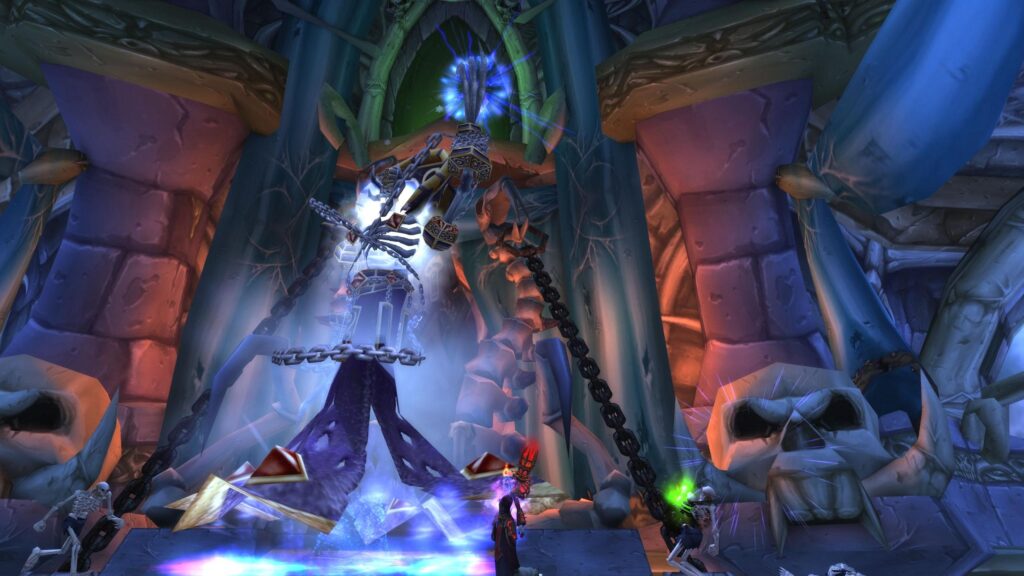
Example: Ragnaros (Molten Core)
The final boss of Molten Core, Ragnaros, had a simple, two-phase fight:
- Phase 1: Melee DPS attacked while avoiding fire knockbacks.
- Phase 2: Sons of Flame adds spawned, forcing a temporary shift in focus.
While memorable and iconic, Classic raids lacked the layered complexity that would define future expansions.
2. The Burning Crusade: Refining Raid Complexity (2007-2008)
With The Burning Crusade, Blizzard experimented with more intricate boss designs, introducing:
- Multi-phase fights that required adaptive strategies.
- Tank-swapping mechanics, preventing a single tank from handling all incoming damage.
- Soft enrage mechanics, forcing DPS players to optimize their rotations.
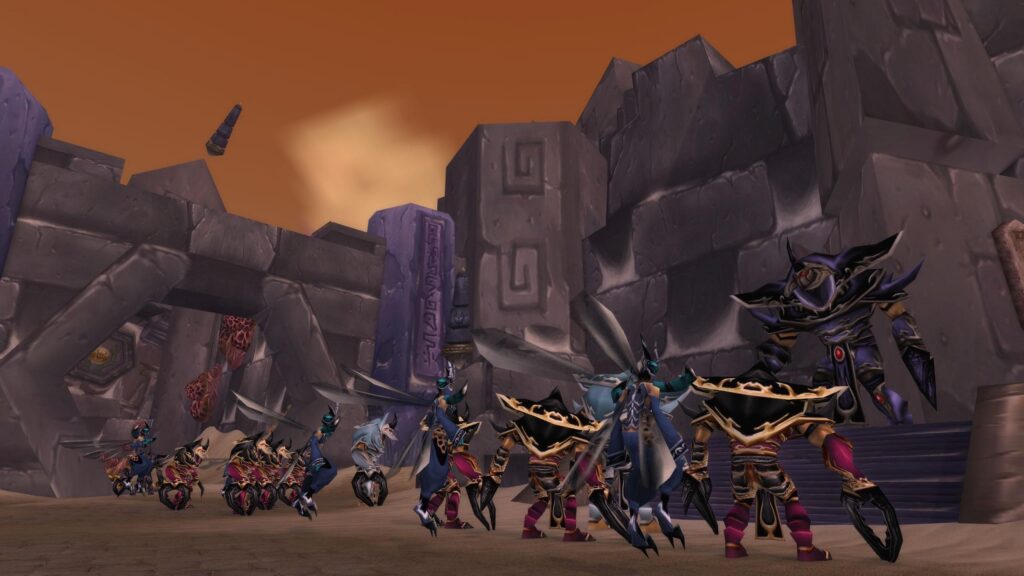
Example: Kael’thas Sunstrider (The Eye)
- Multiple pre-fight minibosses had to be defeated before engaging Kael’thas.
- The legendary weapon phase forced players to use special items mid-fight.
- Gravity-defying combat added a unique airborne phase.
Blizzard was learning that raid fights could be engaging without just increasing boss health pools.
3. Wrath of the Lich King: The Rise of Hard Modes (2008-2010)
By Wrath of the Lich King, Blizzard introduced Hard Modes, which let players choose their own difficulty by activating in-game triggers. This approach was later refined into the Heroic and Mythic difficulty system we know today.
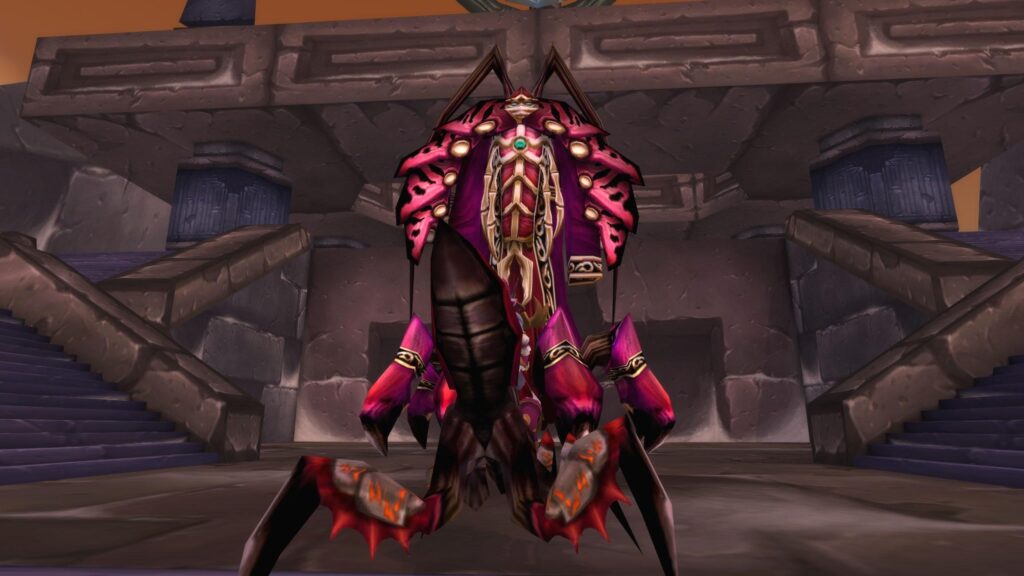
Core Advancements in Wrath Raids
- 10 and 25-player versions provided greater accessibility.
- Hard Modes allowed players to increase difficulty dynamically.
- Phased encounters introduced major fight transformations mid-combat.
Example: Yogg-Saron (Ulduar)
- Sanity Mechanics: Players had to manage a unique “insanity” meter.
- Optional Keepers: Leaving some Keepers alive affected the fight’s difficulty.
- Portal Mechanics: Players traveled into Yogg-Saron’s mind to weaken him.
With Icecrown Citadel, Blizzard implemented Heroic Mode, paving the way for modern Mythic raiding.
4. Cataclysm: The Birth of Modern Raid Complexity (2010-2012)
With Cataclysm, Blizzard took raid complexity to a new level, introducing:
- Highly scripted encounters where mechanics changed dynamically.
- Boss fights requiring all roles (tanks, healers, and DPS) to perform unique tasks.
- Limited attempts per week for certain bosses, increasing raid prestige.
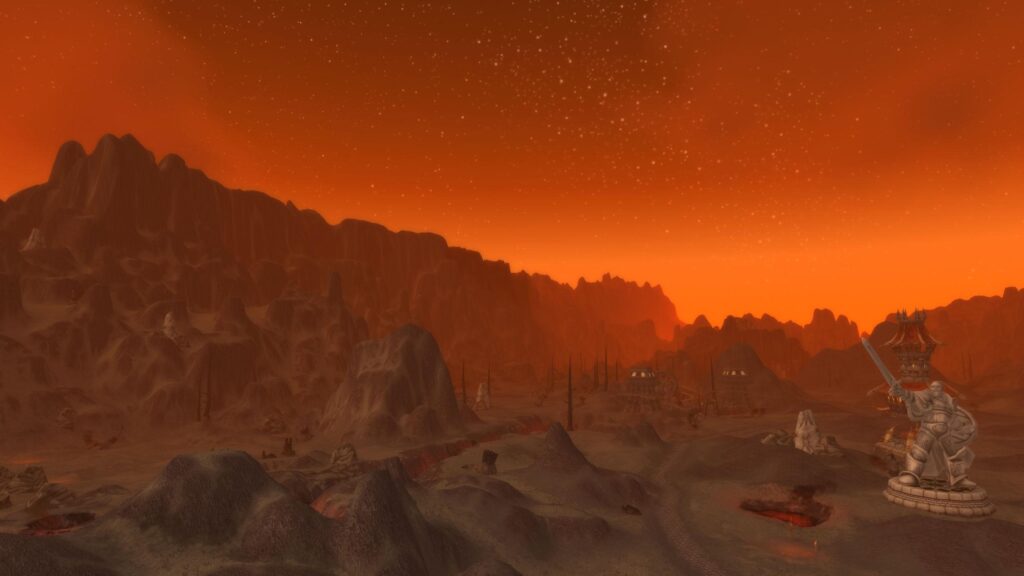
Example: Heroic Ragnaros (Firelands)
- A completely new phase in Heroic difficulty transformed the fight’s final moments.
- Players had to manage wave-based lava spawns while avoiding deadly fire mechanics.
- Raid-wide knockbacks and fire spread mechanics required precise movement.
This era solidified scripted mechanics and phase transitions as staples of modern raiding.
5. Mists of Pandaria to Warlords of Draenor: The Rise of Mythic Raiding (2012-2016)
Blizzard refined raid accessibility by introducing flexible raid sizes and scaling difficulty.
Major Raid Innovations in This Era
- Flex Raiding (Siege of Orgrimmar) allowed raid sizes to adjust dynamically.
- Mythic difficulty (Warlords of Draenor) set a fixed 20-player size for the hardest raids.
- Personal responsibility mechanics forced players to handle individual tasks instead of relying on the raid group.
Example: Mythic Blackhand (Blackrock Foundry)
- Three-phase fight with destructible terrain.
- Siege vehicles and environmental hazards added movement complexity.
With Mythic mode, Blizzard had now perfected the challenge spectrum, from casual to hardcore raiding.
6. Legion to Dragonflight: The Era of Cinematic Raiding (2016-2024)
Modern WoW raids focus on immersion, movement mechanics, and high-stakes execution.
New Raid Design Principles
- Fights feel more like cinematic battles rather than static encounters.
- Expanding environmental mechanics, such as moving platforms and shifting arenas.
- Final bosses with “secret” Mythic phases, adding an extra challenge for top-tier raiders.
Example: Mythic Sylvanas (Shadowlands)
- Three-phase fight across multiple platforms.
- Raid-wide debuffs forced constant movement and adaptation.
Blizzard’s design goal has shifted towards making each encounter a memorable spectacle, rewarding execution over pure damage output.
7. The Future: How The War Within Expands Raid Complexity
With The War Within, Blizzard is pushing raid mechanics further by introducing:
- Adaptive AI-driven mechanics that react to player choices.
- Multi-level fights with vertical combat elements.
- More class-specific mechanics, ensuring that every role is crucial to success.
Blizzard is embracing dynamic fight design, where no two raid attempts will play out exactly the same way.
The Next Evolution of WoW Raiding: What Comes After The War Within?
With each expansion, World of Warcraft refines raid mechanics to enhance challenge, storytelling, and player agency. While The War Within introduces AI-driven mechanics, vertical combat, and multi-phase encounters, it raises an important question: Where does WoW raiding go from here?
As we look toward future expansions, Blizzard could implement entirely new gameplay innovations that redefine how raids function. Let’s explore the possibilities for WoW raiding beyond 2025.
1. Reactive AI: Raids That Adapt to Player Choices
One of Blizzard’s ongoing goals is to increase replayability in raids by making fights feel less scripted and more dynamic. The introduction of adaptive AI-driven mechanics in The War Within is a step in this direction, but future expansions could take this even further.
Imagine a raid boss that:
- Changes attack patterns based on player positioning. If the raid stacks in one area too often, the boss could prioritize massive AoE attacks to force movement.
- Analyzes your raid composition and adjusts abilities accordingly. If your group has fewer healers, the boss might apply more self-healing mechanics to balance the difficulty.
- Remembers previous attempts and adapts. Instead of repeating the same mechanics on every pull, the encounter could “learn” from failed attempts and introduce subtle new challenges.
Such a system would require players to think on their feet rather than memorizing scripted fight mechanics, creating a more immersive and unpredictable raid experience.
2. Large-Scale, Multi-Raid Progression
Currently, each raid tier functions as a self-contained challenge—players clear one raid before moving to the next. However, Blizzard could experiment with interconnected raids, where:
- Decisions in one raid affect another. Imagine a scenario where defeating a boss in one instance weakens a final boss in another raid, similar to how the Keepers in Ulduar impacted Yogg-Saron’s difficulty.
- Cross-instance mechanics come into play. One raid could feature a faction war, with players fighting across multiple strongholds, requiring teams to coordinate between two different raid instances simultaneously.
- Progress is shared between multiple dungeons. Instead of raiders progressing linearly through a single instance, a multi-raid structure could allow different guild teams to tackle separate wings simultaneously, with their actions influencing the final battle.
This would break away from WoW’s traditional raid model, making progression feel more expansive and interconnected.
3. The Return of Dynamic, Player-Triggered Hard Modes
One of Ulduar’s greatest innovations was its Hard Mode system, where players could choose to increase difficulty by interacting with the environment (e.g., leaving Keepers alive, pushing XT-002’s heart phase). This offered an alternative to static Heroic/Mythic difficulty toggles, making encounters feel more player-driven.
A revamped Hard Mode system could:
- Allow players to trigger bonus mechanics for additional rewards. Instead of just increasing boss health, Hard Modes could introduce new mini-bosses or additional ability phases.
- Scale rewards based on how many Hard Modes are activated. A raid team might choose to activate 1-2 additional mechanics for medium rewards or go all-in for high-tier loot.
- Provide an alternative to Mythic difficulty. Some guilds struggle with Mythic’s strict tuning, but Hard Modes could offer a more flexible challenge that bridges the gap between Heroic and Mythic raiding.
Blizzard has already experimented with this in fights like Halion (Ruby Sanctum) and Castle Nathria’s Stone Legion Generals, but bringing back an expansion-wide Hard Mode system could revitalize raid progression.
4. Open-World Raid Encounters: The Return of Epic Scale Battles
Modern raids are instanced, meaning all encounters take place in a closed environment. While this keeps fights predictable and performance stable, it also removes the large-scale, open-world feel of early WoW encounters.
Imagine if Blizzard brought back massive, open-world raid fights, similar to:
- The original Kazzak and Azuregos world bosses.
- The AQ40 War Effort, where players had to work together to unlock the raid.
- Battle for Azeroth’s Warfronts, but on a Mythic raid scale.
An open-world raid could:
- Feature shifting objectives and environmental hazards, requiring teams to constantly reposition and adapt.
- Force Horde and Alliance players to compete for control, turning the fight into a server-wide event.
- Introduce faction-based advantages, where capturing a stronghold grants your raid a temporary buff or access to siege weapons.
While this would require strong server optimization, Blizzard could reintroduce the epic feel of old-school MMO raids, making encounters feel like true world-changing events.
5. PvPvE Raids: The Next Evolution of Faction Warfare
For years, WoW’s raiding experience has been purely PvE, but what if Blizzard introduced a PvPvE raid where Alliance and Horde teams competed within the same instance?
A PvPvE raid could:
- Pit two raid teams against each other in a race to defeat the final boss first. Players could trigger events to sabotage the opposing raid, such as summoning extra adds or activating environmental hazards.
- Include faction-based objectives, where Horde and Alliance must control key zones before engaging the final boss.
- Allow cross-faction alliances. Some mechanics could require temporary cooperation between factions, forcing players to make tactical decisions about when to fight and when to work together.
This type of encounter would blend the best aspects of raiding, battlegrounds, and world PvP, creating a unique challenge that no other MMO currently offers.
6. Player-Influenced Raiding: Dynamic Story Outcomes
One of the biggest criticisms of modern WoW raiding is that boss fights always end the same way—players defeat a villain, and the next patch brings a new one. However, Blizzard could introduce multiple raid endings, where:
- Guilds’ choices impact future patches. Perhaps defeating a boss too quickly results in a different faction taking control of a stronghold, affecting which enemies appear in the next expansion.
- Fights include decision-based mechanics. Instead of just defeating a villain, players could choose to spare or imprison them, changing the loot table and leading to different story consequences.
- The final boss is chosen by players. Depending on how the raid progresses, the final boss might be a different enemy each time, making progression less predictable and more engaging.
This would give players more control over WoW’s evolving narrative, making raids feel less like scripted events and more like real, world-shaping battles.
Final Thoughts: The Unstoppable Evolution of WoW Raiding
Over the years, WoW’s raiding experience has transformed from simple tank-and-spank fights into complex, multi-layered encounters that require precision, coordination, and adaptability.
✔ Classic raids were all about endurance and preparation.
✔ The Burning Crusade and Wrath introduced multi-phase fights and difficulty scaling.
✔ Cataclysm and beyond focused on cinematic storytelling, execution-heavy mechanics, and interactive raid elements.
✔ The War Within will introduce AI-driven mechanics and vertical combat.
✔ Future expansions could bring reactive AI, Hard Modes, faction-based PvPvE raids, and dynamic player-driven outcomes.
As Blizzard continues to refine how raids are structured, WoW’s future remains exciting. Whether through AI-enhanced fights, open-world bosses, or faction-based battles, one thing is certain—raiding in WoW will continue to evolve, challenging players in new and unexpected ways.
So the real question is: What will YOUR ultimate raid experience look like in the future of WoW?
Leave a Reply